
How to Prove Your Song Isn't AI in 2026 (Before a Distributor Pulls It)
How to prove song not AI generated in 2026: C2PA credentials, session files, distributor checklists, and the exact steps to take if your track gets flagged.
Reviewed by the Chartlex editorial team·Editorial policy
Explore with AI
Get an instant summary of this guide from your favourite assistant.
Quick Answer
To prove your song was made by humans in 2026, you need three things ready before you upload: a complete DAW session file with timestamped edits, C2PA Content Credentials embedded in the master, and a paper trail of stems plus dated voice memos. Bandcamp's January 13, 2026 "Keeping Bandcamp Human" policy now removes tracks on suspicion alone, and Spotify deleted over 75 million spammy tracks in a single 12 month window. According to Chartlex campaign data from 2,400+ campaigns, releases flagged for AI review lose an average of 11 days of momentum even when reinstated. This guide is the defensive playbook: what to attach before you submit, which distributors trigger fastest, and the exact recovery sequence if your track gets pulled.
Why This Suddenly Matters in 2026
Two events changed the rules. On September 25, 2025, Spotify announced strengthened AI protections, a new spam filter, and adoption of the DDEX standard for AI disclosure in credits. Then on January 13, 2026, Bandcamp published "Keeping Bandcamp Human," banning music generated wholly or in substantial part by AI and reserving the right to remove any track on suspicion. Suspicion. No proof required.
That language is the shift. For a decade, the burden of evidence sat with platforms. Now it sits with you.
The C2PA (Coalition for Content Provenance and Authenticity) standard has crossed 6,000 members and affiliates including Google, Meta, OpenAI, Sony, Nikon, and Leica. By August 2, 2026, the EU AI Act requires AI generated audio to carry machine readable provenance markings. Sync licensors are already requiring C2PA manifests as a condition of placement.
If you are a working musician with no AI in your workflow, none of this protects you automatically. You still have to prove it.
The Three Layers of Proof Every Track Needs
Think of provenance like a chain. Each link is weak alone but together they survive almost any review.
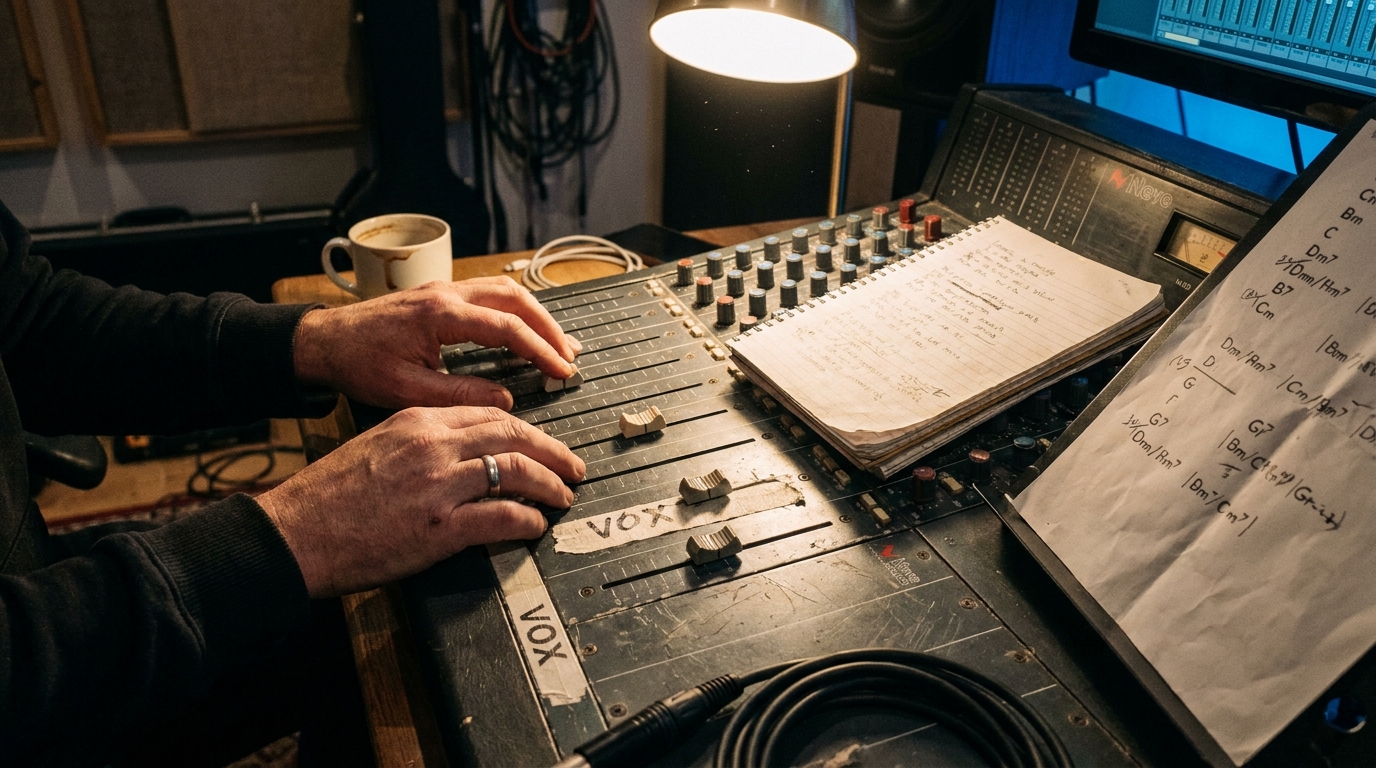
Layer 1: The session file. Your DAW project (Logic, Ableton, Pro Tools, FL Studio, Reaper) is the strongest single piece of evidence you can hold. It contains automation lanes, plugin states, MIDI edits, and a timestamp history that AI generators cannot fabricate. Save the session file with the same name as your master and archive it the day you bounce.
Layer 2: Content Credentials (C2PA). Embedded cryptographic metadata that records who made the file, what tools touched it, and when. Adobe Premiere, Photoshop, and a growing list of audio tools now sign exports natively. For tracks bounced before C2PA support, you can attach credentials manually using the open source c2patool from the C2PA project.
Layer 3: Process artifacts. Voice memos of takes, dated stems, screen recordings of mixing sessions, and email threads with collaborators. These are the breadcrumbs a reviewer can follow when an algorithm flags you.
| Proof Layer | What It Proves | Effort | Survives Re-Encode |
|---|---|---|---|
| DAW session file | Human edits, automation, MIDI | Low (already exists) | N/A (separate file) |
| C2PA manifest | Tool chain, signing identity | Medium | Yes (when sidecar) |
| Stems + voice memos | Performance authenticity | Low | Yes |
| SynthID absence scan | No Google AI watermark present | Low | Yes |
| Collaborator emails | Third party witness | Low | Yes |
Distributor by Distributor: Who Flags Fastest
Detection aggression varies wildly across the major distributors. Here is the current state based on public policy and reported takedowns through Q2 2026.
| Distributor | AI Policy | Detection Approach | False Positive Risk |
|---|---|---|---|
| Bandcamp | Full ban on substantial AI use | Community flagging plus suspicion based removal | High |
| CD Baby | Rejects 100% fully AI generated | Pre upload screening | Medium |
| TuneCore | Requires AI disclosure | Metadata plus basic spectral analysis | Medium |
| DistroKid | Allows AI with disclosure | Automated detection with conditions | Medium |
| Spotify (direct) | DDEX disclosure required | Spam filter plus impersonation review | Lower (post upload) |
The pattern that bites independent artists hardest is the third row of CD Baby and TuneCore. Hybrid workflows (vocal sampler, AI mastering assistant, AI noise reduction) can trip detection that was tuned for fully generated tracks. Artists who uploaded the same kind of music two years ago without incident are now getting takedowns.
Bandcamp is the highest false positive risk because the policy explicitly accepts suspicion as grounds. There is no defense built into the system. There is only your appeal.
What To Do BEFORE You Upload
Run this checklist on every release. It takes about 20 minutes once you have the workflow set up, and it is the single biggest insurance policy against a takedown.
1. Archive the session file. Zip the DAW project plus all sample folders. Name it [ARTIST]_[TRACK]_session_[YYYY-MM-DD].zip and store it somewhere with a creation timestamp you do not control (Google Drive, Dropbox, iCloud).
2. Bounce stems alongside the master. Drums, bass, vocal lead, vocal stack, instruments, FX. Stems prove arrangement decisions and let a reviewer hear isolated performance.
3. Capture a 30 second screen recording of the mix session. QuickTime, OBS, anything. You scrubbing through automation lanes is irrefutable. Keep it. You will probably never need it.
First Push
Never put money behind a track before? First Push is the smallest way to find out how one song responds over about four weeks, and it counts toward anything bigger later.
- ✓About 600 new monthly listeners on one track
- ✓Paced over roughly four weeks, not a single burst
- ✓100% credits toward a bigger campaign within 30 days
- ✓The lowest cost way to try one track
Pick your track here. Credit applies if you upgrade within 30 days.
4. Sign the master with C2PA Content Credentials. Use c2patool from the C2PA project to embed a manifest with your identity, the date, and the tool chain. This is the machine readable layer that platforms can verify automatically.
5. Run a SynthID absence scan. Google's SynthID Detector identifies content made with Google's AI tools. A clean scan is positive evidence your track did not come out of Lyria 3 or any Gemini powered audio model. Over 10 billion pieces of content already carry SynthID watermarks, so a negative result has weight.
6. Document collaborators. Even if you produced solo, an email to your mix engineer or master engineer that references the project by name creates a third party witness with an independent timestamp.
7. Disclose AI assists honestly. If you used AI mastering, AI stem separation, or AI noise reduction, declare it through your distributor's DDEX disclosure field. Spotify's policy specifically targets undisclosed use, not disclosed use.
What To Do IF You Get Flagged
The first 48 hours matter most. Recovery from a takedown follows a predictable sequence.
Hour 0 to 6: Do not panic post. Every distributor has a reinstatement workflow. Public outrage on social media slows it down because the support agent now has to escalate to legal.
Hour 6 to 24: Open a single ticket with the full proof package attached. Session file zip, stems, voice memo, C2PA manifest export, SynthID scan result. One ticket, not five. Subject line: "Provenance evidence for [Track Title] takedown review."
Hour 24 to 72: Follow up once. Polite, factual, linked to the original ticket. If you have a Chartlex campaign running, also alert your campaign manager so the schedule can be paused rather than wasting daily playlist adds on an unavailable track.
Day 3 to 7: Escalate if no response. Ask for review by a human reviewer with audio engineering background. Reference the C2PA manifest and the session file timestamps directly.
According to Chartlex campaign data from 2,400+ campaigns, releases that go through a takedown and reinstatement cycle lose an average of 11 days of momentum. The tracks that recover fastest are the ones whose owners had the proof package built before the upload, not after the email.
The Sync and Licensing Angle
Sync agencies, ad agencies, and film music supervisors are moving faster than streaming platforms on this. Several major sync licensors now require C2PA manifests as a condition of placement, and the EU AI Act's August 2, 2026 deadline applies to commercial use of AI generated audio across every member state.
If you pitch sync, your provenance package is no longer optional. It is the first attachment in the email.
| Use Case | C2PA Required (2026) | Penalty for Missing |
|---|---|---|
| Streaming upload | Recommended | Higher takedown risk |
| Sync placement | Effectively required | Disqualified from pitch |
| EU commercial use | Required by Aug 2 | Regulatory non compliance |
| Bandcamp release | Not accepted (no AI) | Removal on suspicion |
| Brand partnership | Required by most agencies | Lost contract |
A Note on Tools You Probably Already Use
Most working musicians touch at least one AI tool in their pipeline. iZotope's noise reduction, LANDR mastering, Splice's stem separation, Logic's Mastering Assistant, even Auto-Tune at extreme settings can register on detection systems tuned for spectral patterns.
This is not the same as the song being AI. The song is human. The cleanup is assisted. Disclose it through DDEX, keep your session file, and the disclosure itself becomes evidence of good faith. The worst posture is silence followed by a takedown.
The Permanent Habit
Build the archive habit once and you never think about it again. Every time you bounce a master, the same script runs: zip the session, render the stems, sign with C2PA, file the result. Twenty minutes. Forever insurance.
The artists who lose work in 2026 are the ones who treated provenance as paranoia. The artists who keep working are the ones who treated it as filing.
If you are about to release and want a second pair of eyes on your release readiness, run through the release checklist tool or grab a free audit of your upcoming track. If you want streaming push that respects every provenance and disclosure rule we just covered, our campaign plans are built around it.
Frequently Asked Questions
Free Spotify Audit
See exactly where your Spotify profile is leaking growth.
One audit finds an average of 4 growth blockers per artist profile.
Pro Growth Plan
$599/mo
Serious about building a music business? Consistent algorithmic momentum puts you on Spotify's radar.
Verified in Spotify for Artists · Geo-targeted · Cancel anytime
Is a DAW session file enough proof on its own?
A session file is the single strongest piece of evidence, but reviewers prefer multiple independent sources. Pair the session with C2PA Content Credentials and at least one third party timestamp such as a dated email to a collaborator. Three weak signals combined are stronger than one strong signal alone, especially when the policy allows takedown on suspicion.
Does Spotify actually check Content Credentials in 2026?
Spotify announced adoption of DDEX standardized AI disclosure in September 2025 and rolled out a spam filter the same fall. Direct verification of C2PA manifests is not yet automatic across all uploads, but the metadata travels with the file and is checked when a track is escalated for review. Embedding it costs nothing and pays off the moment you are flagged.
Can I sign a track with C2PA after I already released it?
Yes. The C2PA project distributes an open source command line tool called c2patool that embeds a manifest into existing audio files. The signature will be dated to when you signed it, not when you released, which is honest and reviewers understand. Pair it with your archived session file to anchor the original creation date.
What if I used an AI mastering service like LANDR?
Disclose it through your distributor's DDEX field as AI assisted post production. AI mastering is broadly accepted across every major distributor as long as the human composition and performance remain. The danger is undisclosed use, because once a reviewer detects the AI signature without a matching disclosure, your good faith is in question on every other layer of the track.
Does SynthID detect non Google AI music tools?
No. SynthID is Google's watermark embedded in Lyria 3 and other Gemini powered models. A clean SynthID scan only proves your track did not come from Google's stack. To rule out Suno, Udio, and other generators you would need a separate detection pass, but no single tool covers every model. The strongest proof remains your session file and human process artifacts.
How long does a Bandcamp suspicion takedown take to resolve?
Bandcamp's policy reserves the right to remove music on suspicion without an audit, so timelines vary. Resolved cases typically run 5 to 14 days when the artist provides a complete proof package on the first ticket. Cases without a session file or any provenance documentation often do not get reinstated at all, because the policy does not require Bandcamp to prove the AI claim.
Should I add Content Credentials to old back catalog tracks?
For tracks you actively promote, yes. For deep catalog with low traffic, the effort outweighs the risk. Prioritize releases from the last 18 months and any track you are pitching for sync. The signing process is fast once you have c2patool installed, so a weekend session can cover a full active catalog.
Related Reading
Free Weekly Playbook
One actionable insight, every Tuesday.
Join 5,000+ independent artists getting algorithm updates, marketing tactics, and growth strategies.
No spam. Unsubscribe anytime.
Get a business health check for your music career.
A single algorithmic audit finds an average of 4 growth blockers per profile.
Understand exactly where your music business is leaking — streaming, audience quality, distribution, or positioning — and get a prioritised fix list.
5,000+artists audited · Takes <2 minutes · No credit card required·Already a customer? Open Dashboard →
Campaign Dashboard
Turn Knowledge Into Action
Track your streams, monitor algorithmic triggers, and see growth projections in real time. The Campaign Dashboard puts everything you just read into practice.
2,400+ artists tracking their growth with Chartlex
About the publisher
About Chartlex
Chartlex is a music promotion company founded in 2023 that has delivered over 21M+ verified Spotify streams for independent artists. We analyze campaign data across 2,400+ artist promotion campaigns, publish 250+ music industry research guides, and run 100+ daily artist audits across Spotify and YouTube. Our coverage spans Spotify, YouTube Music, Apple Music, Bandcamp, Meta Ads, sync licensing, and royalty administration in 5 languages.
- Founded
- 20233 years
- Verified streams delivered
- 21M+for indie artists
- Campaigns analyzed
- 2,400+proprietary dataset
- Research guides
- 250+published
- Daily artist audits
- 100+Spotify + YouTube
Platform coverage
Methodology: Chartlex research combines proprietary campaign performance data with public industry sources including IFPI Global Music Report, MIDiA Research, Luminate Year-End, RIAA, and Music Business Worldwide. All findings are refreshed quarterly. Last verified: 2026-09-29.
Keep reading
AI music rules 2026 explained: Spotify and Apple disclosure tags, platform detection, the EU AI Act, and your rights across every major service.
Daniel Brooks
Inside the velvet sundown ai band spotify hoax: 1.4M listeners, three albums, Suno-generated, and the algorithm signals indies can replicate (legally).
Marcus Vale
Spotify ai disclosure song credits launched in beta April 2026 via DistroKid. Here is what the tag does, what it risks, and whether indies should opt in.
Daniel Brooks